
Short Answer
Approve a pendant sample against an identified specification, not a photograph or a general impression. Confirm the selected style, dimensions, material scope, finish, attachment fit and packaging; record evidence and unresolved issues for each requirement. Keep visual review separate from measurement and testing. Give a dated written decision that names the sample and revision, then confirm which production and inspection requirements remain separate.
Identify the Sample Before Reviewing It
Give the sample a reference that both buyer and supplier can use. Record the selected style, color or finish, sample revision and date received. Identify every supplied component, including any ring, clasp or chain. Keep the corresponding drawing, quotation and requested changes together so that an approval cannot be confused with a different configuration.
Choose the intended application before checking fit. A standalone pendant and a decorative component proposed for another accessory require different review details. If the pendant will connect to a receiving product, identify that product and its revision too. A loose sample should not be treated as an approved complete assembly.
Use a Requirement-by-Requirement Checklist
The checklist below is a starting point for buyer and supplier agreement. It is not a certificate, a completed inspection record or a universal testing standard. Add the project requirements and acceptance criteria before evaluating the sample.
| Review Item | What to Confirm | Record to Keep |
|---|---|---|
| Style and components | Selected shape, configuration and included fittings | Sample ID, component list and annotated photographs |
| Dimensions and weight | Overall versus component measurements, units and agreed tolerances | Dimensioned reference and actual measurement record |
| Material scope | Which material statement applies to each component | Agreed written specification and requested supporting evidence |
| Finish and appearance | Approved reference, visible surfaces and requested changes | Dated appearance review identifying each affected part |
| Attachment and function | Receiving part, clearance, orientation and agreed operation checks | Assembly reference and results of the agreed checks |
| Packaging and labels | Supplied parts, separation, pack quantity and artwork version | Pack sample reference and approval notes |
| Required testing | Method, acceptance criteria and configuration covered | Matching result or an explicit pending-evidence status |
Do Not Combine Different Measurement References
Separate overall size from the decorative body, clasp and usable opening. Record units and clarify the agreed tolerance before judging a difference. A dimensioned photograph may be useful for the brief, but it should not replace the record of what was measured on the actual sample when measurement is part of the approval.
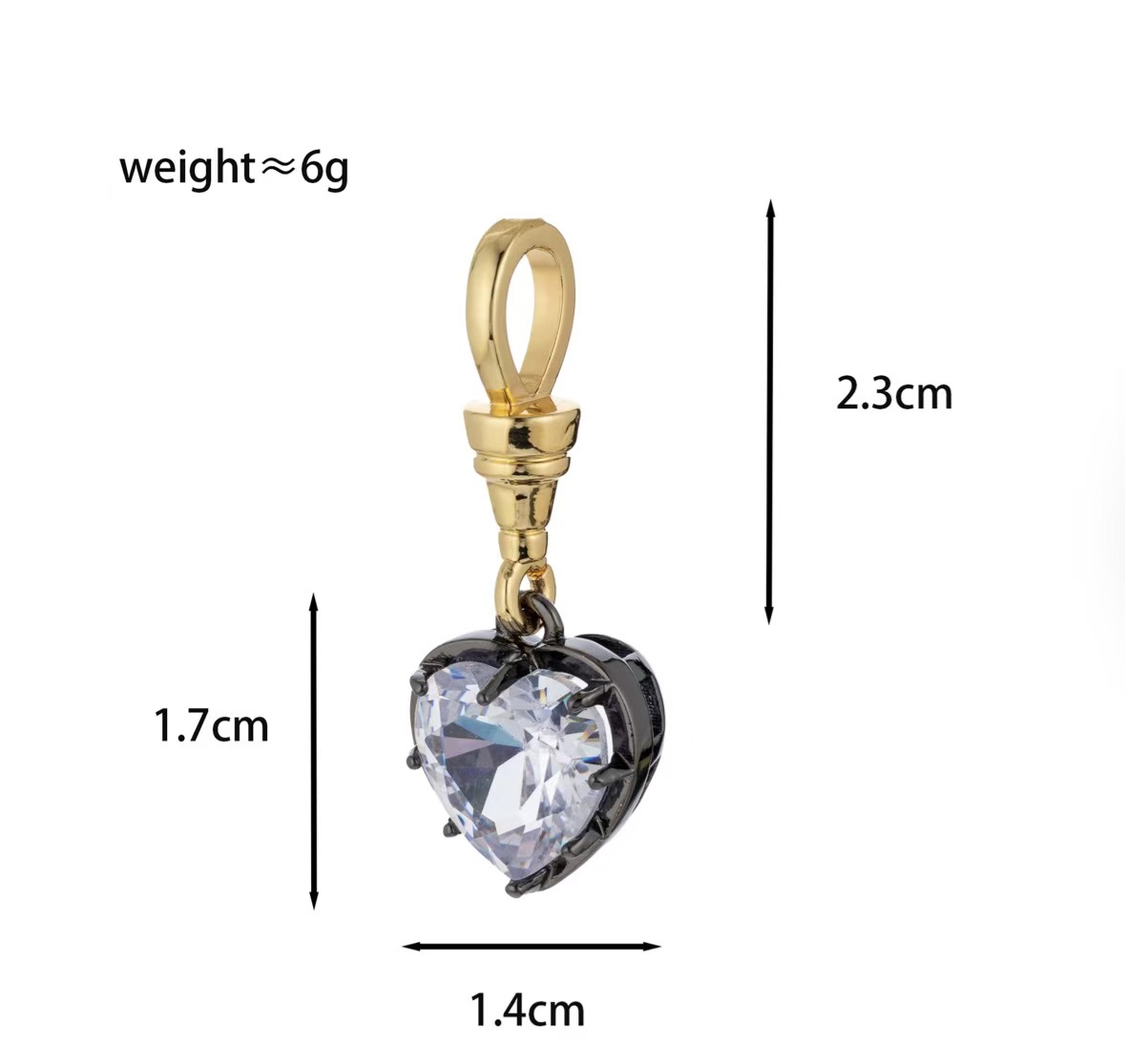
The published pendant specifications distinguish the shape-table dimensions from the separate heart reference. The heart illustration labels a 1.7 by 1.4 cm heart section, a 2.3 cm upper clasp section and approximately 6 g weight. Do not add component lengths to invent an overall length or transfer one reference's dimensions to another style.
Review Material and Finish Without Filling the Gaps
Compare the sample with the agreed material description and appearance reference. If the record says gold-plated copper, ask which components it covers. Do not infer the decorative insert composition, plating thickness or gold purity from the photograph. Mark any required but unsupported specification as pending rather than accepting it by assumption.
Use the Pendant Plating & Finish guide to separate appearance approval from coating specifications and supporting documentation. Identify the front, back, edges and fittings in your comments. If a finish change is requested, state whether a new sample or another form of evidence is needed before closing that item.
Check the Intended Assembly
Review the pendant with the receiving chain, loop or accessory identified in the brief. Confirm the usable opening, orientation, contact points and operation of any removable fitting. Keep the reviewed configuration visible in the record. An attractive loose pendant does not establish that the proposed assembled product will fit or function as intended.
The Pendant Attachment guide helps prepare the mating-part dimensions and connection requirements. If retention, repeated operation or another test is required, agree the method and acceptance criteria first. This checklist does not supply a force threshold, cycle count or passed result for any product.
Include the Pack and Any Supplied Parts
Check whether the pack contains the pendant alone or includes a chain, ring, clasp or other part. Review the agreed separation, labels, barcode requirements and presentation using the intended components. Record the artwork version and quantity per pack. Individual packaging in a stock description does not automatically confirm a custom retail pack or branded label.
Use the private label packaging checklist for the brief, then keep the pendant-specific pack approval with the same sample record. Note any packaging item still awaiting confirmation before placing the order.
Record the Decision and the Next Action
Use a clear decision for each requirement: approved, revision required, or pending evidence. A pending field is not a pass. Describe requested changes precisely, assign a responsible contact and agree the next review step. If the sample changes, retain the earlier record and identify the new revision instead of overwriting the history.
- Style, sample ID, specification revision and intended application.
- Reviewed components, measurements and evidence references.
- Decision and open issue for each checklist item.
- Required revision, responsible contact and next review step.
- Approver, approval date and scope of the written decision.
Before production, confirm the order specification, quantities by style and finish, included parts, packaging, timing and agreed inspection requirements separately. Sample approval is not evidence that the later production batch has been inspected. Submit unresolved requirements through Custom & OEM pendant review rather than leaving them implicit.
Pendant Sample Approval FAQ
Can I approve a pendant sample from photographs alone?
Photographs can support a visual review, but they do not establish measured dimensions, usable attachment openings, weight or test performance. State exactly what the photo review covers. Where fit, handling or testing matters, request the physical sample or the relevant measurement and test records before approving that requirement.
What should I do when a pendant sample needs changes?
Record each change against the sample identifier and affected component. Include the requested specification, a marked image where useful, the responsible contact and whether another sample or supporting record is required. Keep the affected requirement pending until the revision is reviewed; do not treat a general approval message as approval of unresolved changes.
Does sample approval also approve the bulk production batch?
No. A sample approval records the decision on an identified sample and its agreed specification. Confirm the separate production and inspection requirements in the order. Retain the approved reference and record how later changes will be reviewed; a sample photograph does not establish that a subsequent batch has passed inspection.
What information belongs in a pendant sample approval record?
Include the style and sample identifier, specification revision, reviewed components, measurements or evidence used, open issues, decision, approver and date. State whether the decision is approved, revision required or pending evidence, and identify the next action. Keep any required testing and packaging approval traceable to the same product.
Prepare Your Sample Review Brief
Identify your pendant reference, attach the specification and list any open approval questions. Sample availability, MOQ and timing require project-specific confirmation.
Send Your Pendant Sample Brief